10 of the World’s Most Unusual Dairy Foods (And the Cultures That Love Them)
When you think of dairy, what comes to mind?
A cold glass of milk? A scoop of ice cream? Maybe a generous helping of butter on warm bread?
Those are certainly some of our favorites here at High Desert Milk. But travel a little farther around the world, and you’ll discover that people have come up with some pretty extraordinary ways to enjoy milk.
We’re talking about cheese that’s hard as a rock, tea made with yak butter, and fermented milk that’s practically stretchy.
And while some of these foods might seem strange to us, they’ve been beloved staples in their cultures for generations.
So grab your imaginary passport. We’re taking a trip around the world to discover 10 of the most unusual dairy foods you probably never knew existed.
1. Airag: Mongolia’s Fermented Horse Milk
Where: Mongolia
Let’s start with something you probably won’t find in your local grocery store: fermented horse milk.
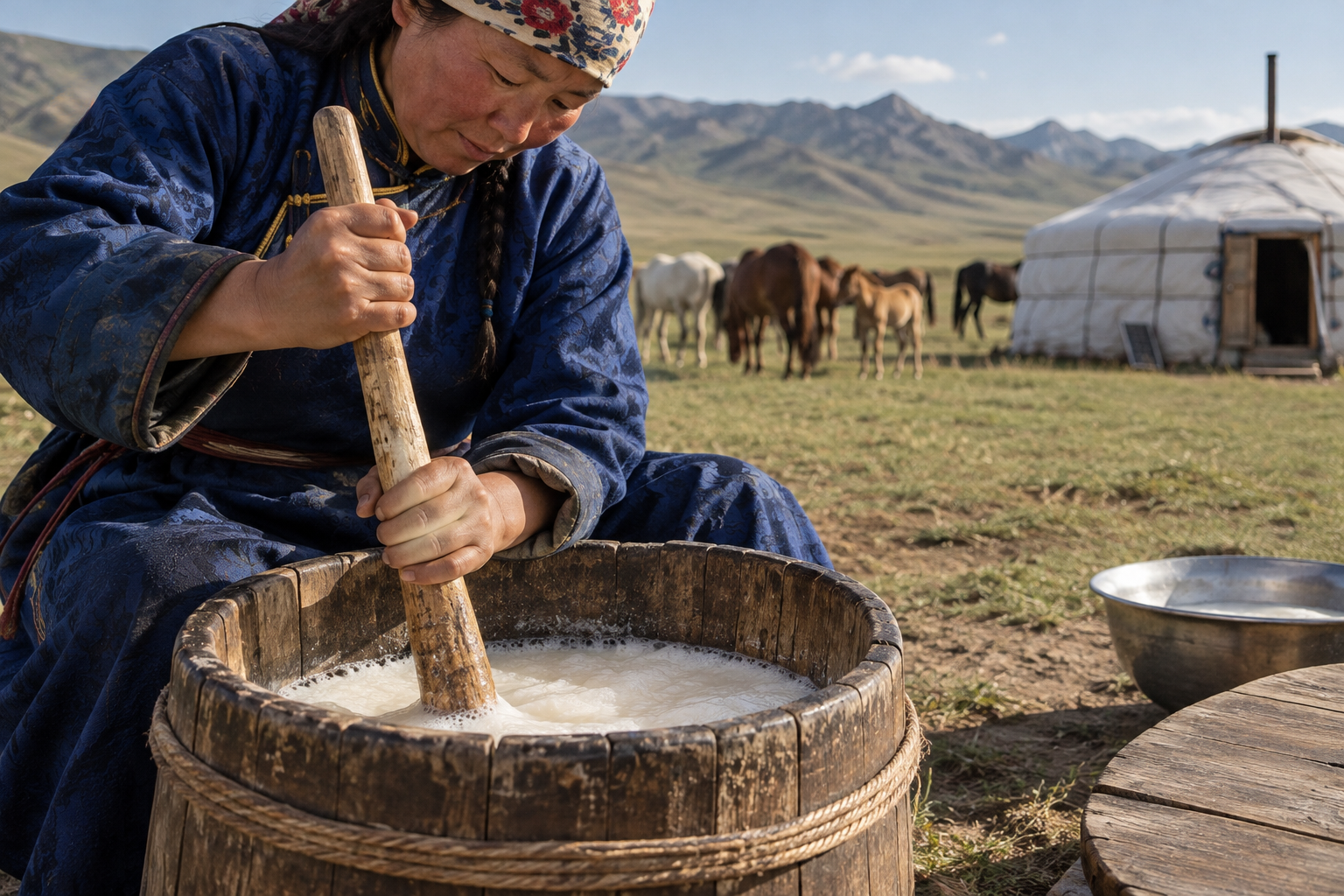
Known as airag in Mongolia, this traditional beverage is made from mare’s milk that’s fermented until it develops a tangy, slightly fizzy flavor.
And yes, it contains a small amount of alcohol, naturally produced during fermentation.
Airag has been part of Mongolian nomadic culture for centuries. Families traditionally prepare it during the summer months, when mares are producing milk, and offer it to guests as a symbol of hospitality.
The fermentation process also makes the beverage quite different from fresh milk, both in flavor and composition.
Fun fact: Traditional airag is often stirred or churned repeatedly during fermentation. In some households, visitors help stir the fermenting milk as part of the preparation tradition.
2. Yak Butter Tea: A Salty Cup of Comfort
Where: Tibet and the Himalayan region
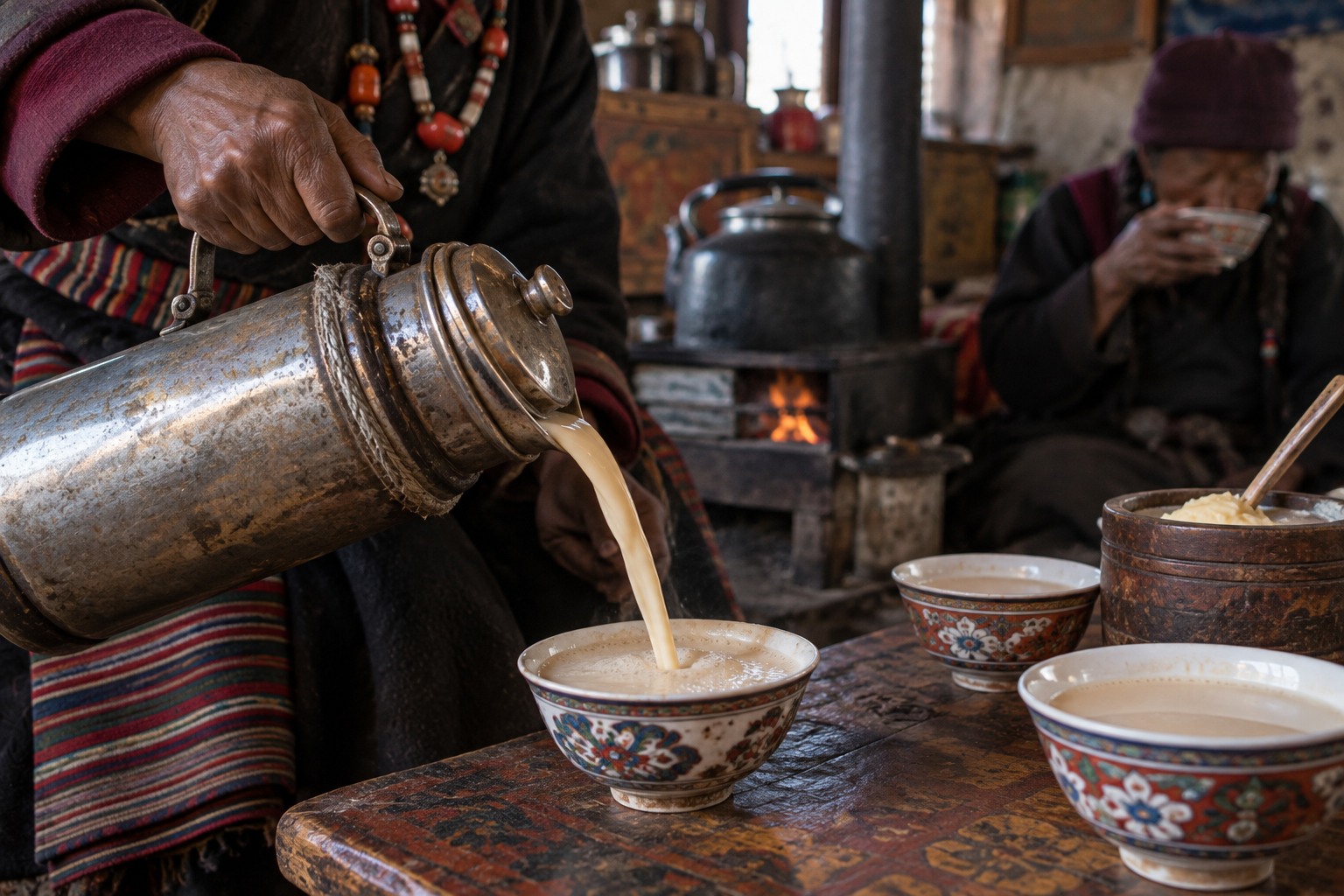
Imagine someone handing you a steaming cup of tea.
You take a sip, expecting something sweet or pleasantly bitter.
Instead, it’s salty, rich, and buttery.
Welcome to the world of Tibetan butter tea, often called po cha.
This traditional drink combines brewed tea, butter (traditionally made from yak milk), salt, and water into a rich, warming beverage.
At high elevations, where temperatures can be bitterly cold and daily life can be physically demanding, butter tea provides valuable calories and warmth.
It’s also deeply connected to hospitality. Guests may be offered repeated servings during a visit.
Fun fact: Butter tea is traditionally churned to combine the butter and tea into a smooth mixture. It’s a little like blending butter into your morning coffee, except the Himalayan tradition developed long before modern butter-coffee trends.
3. Chhurpi: The Cheese That Can Last for Hours
Where: Nepal and the Himalayan region
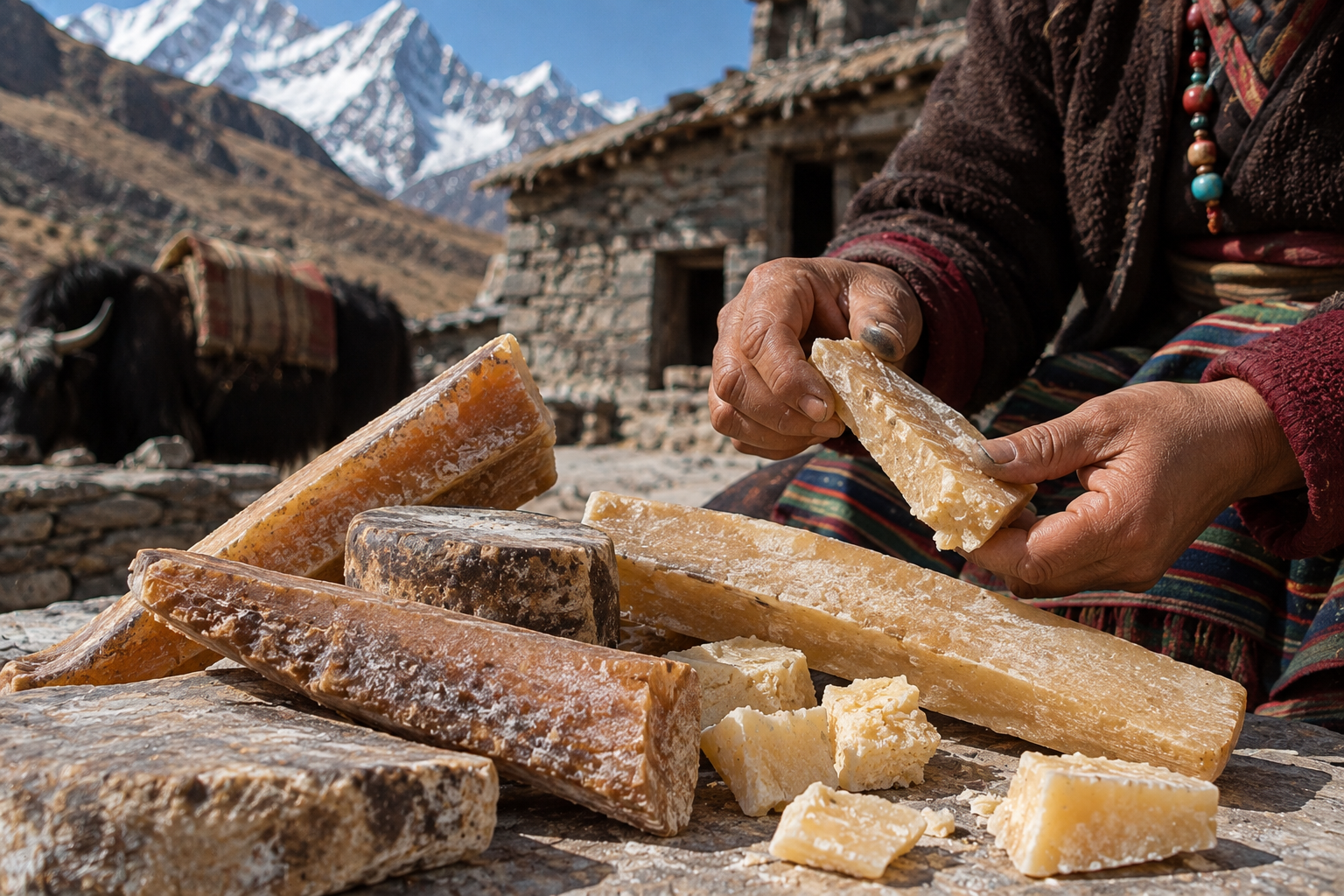
Think you’ve tried hard cheese?
Think again.
Chhurpi is a traditional Himalayan cheese made using milk from yaks, cattle, or their hybrids, depending on the region.
It comes in different forms, but the hardest variety is especially remarkable.
After the curds are pressed and dried, the cheese becomes incredibly tough. Rather than biting into it, people typically soften it slowly in their mouths, chewing it over an extended period.
A small piece can last a surprisingly long time.
This makes hard chhurpi a convenient food for people traveling or working in mountainous regions.
Fun fact: Hard chhurpi has also inspired commercially sold dog chews, sometimes marketed as Himalayan cheese chews.
4. Brunost: Norway’s Sweet Brown Cheese
Where: Norway
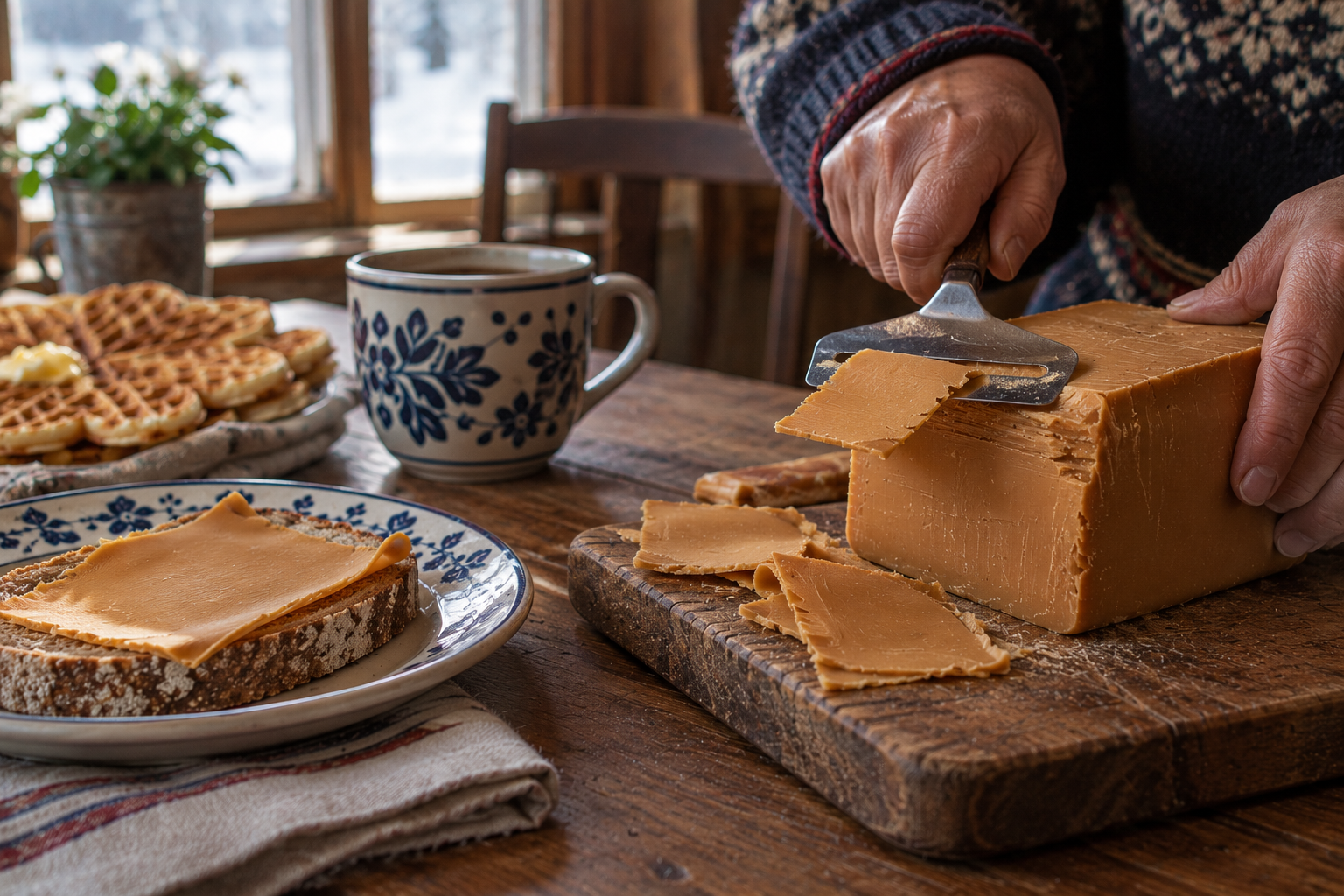
What if cheese tasted like caramel?
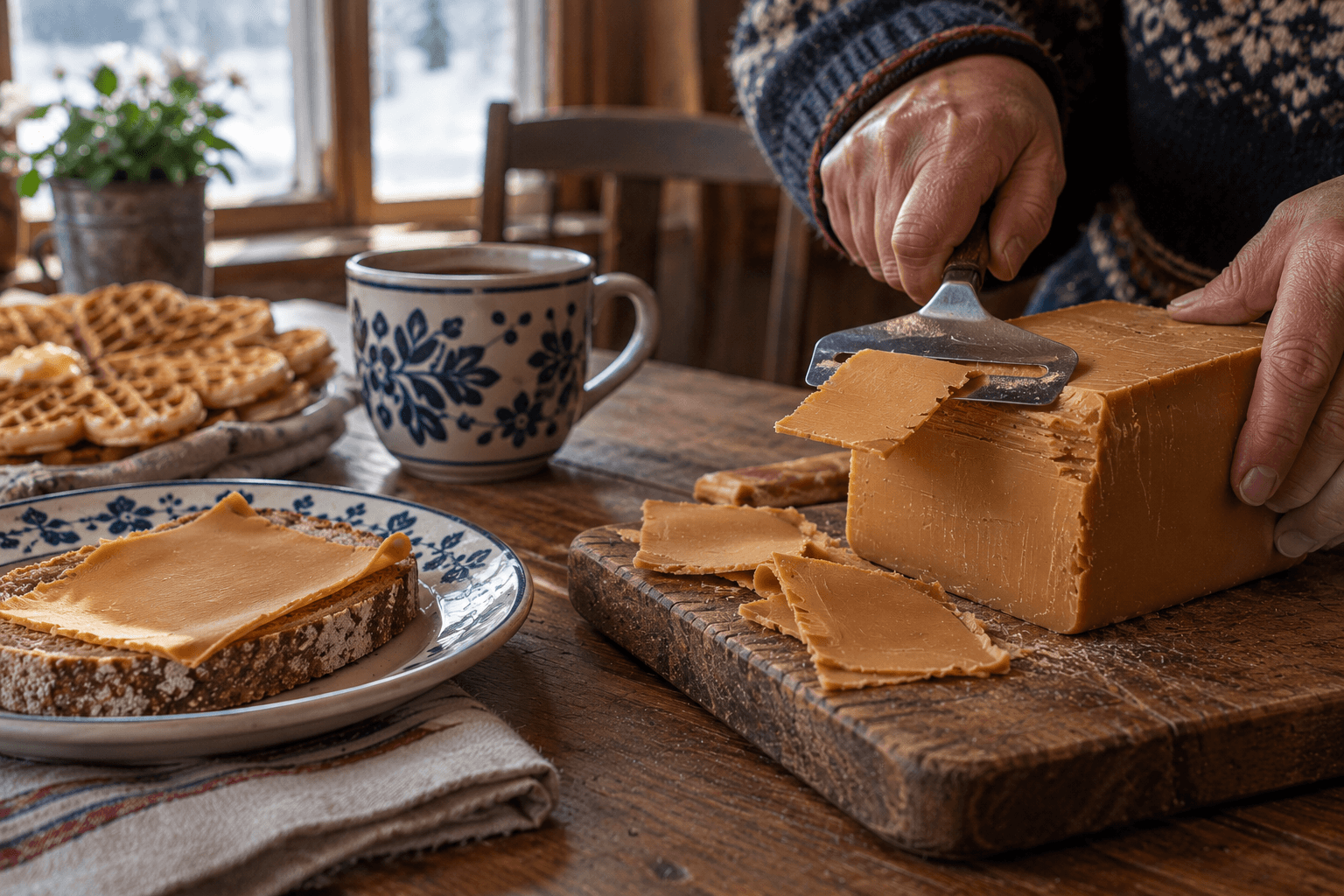
That’s essentially the appeal of brunost, Norway’s famous brown cheese.
Unlike most traditional cheeses, brunost is made by heating whey, often with added milk or cream, until much of the water evaporates and the milk sugars develop a rich, caramel-like flavor.
The result is a firm, brown dairy product with a sweet, slightly tangy taste.
Norwegians commonly enjoy thin slices of brunost on bread, toast, or waffles.
Although everyone calls it brown cheese, brunost is technically different from conventional cheese because it’s made primarily from concentrated whey rather than pressed curds.
Fun fact: The Norwegian cheese slicer, or ostehøvel, is especially useful for cutting the thin, even slices of brunost that many Norwegians prefer.
5. Aaruul: Mongolia’s Sun-Dried Dairy Snack
Where: Mongolia
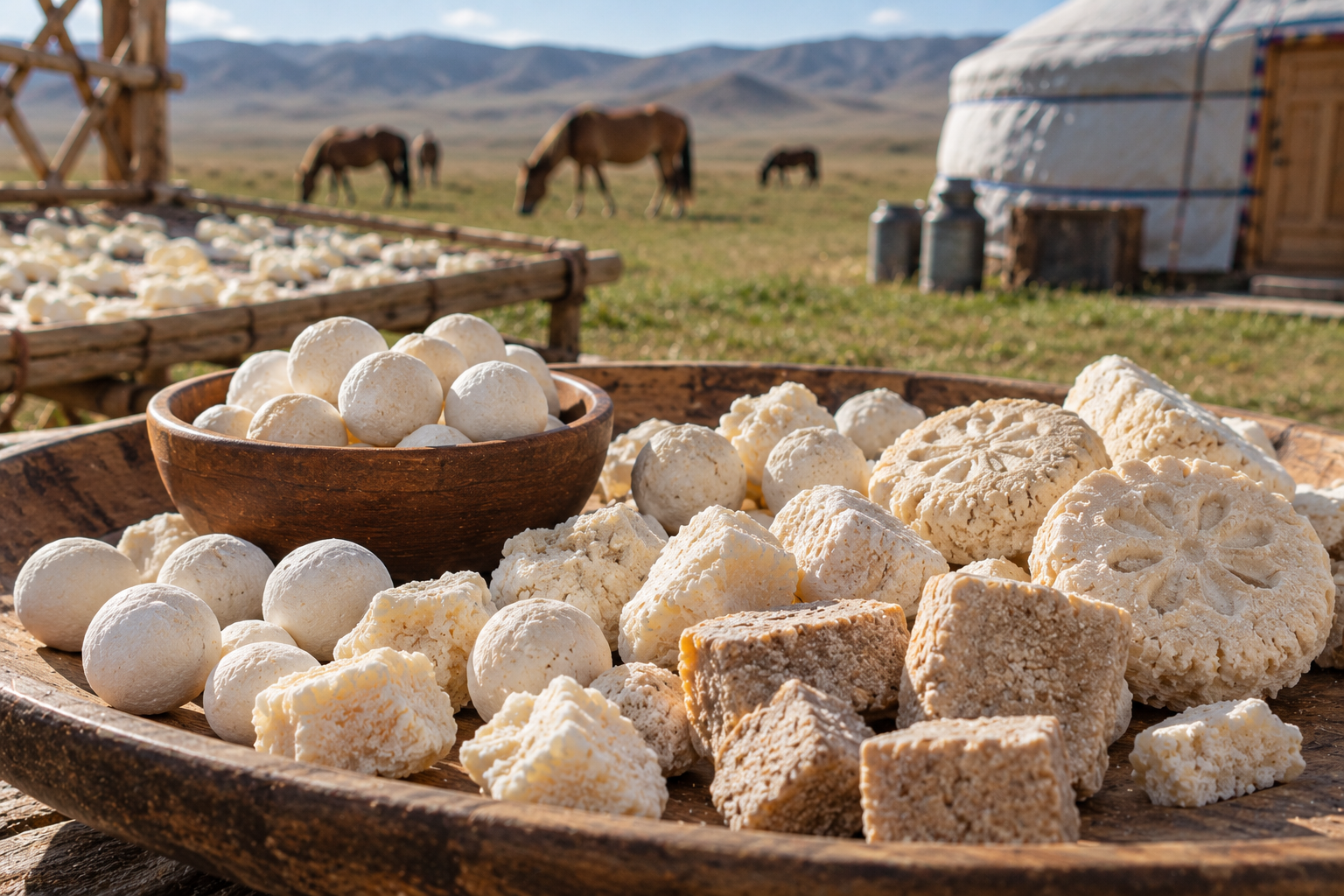
In many parts of the world, refrigeration is essential for keeping dairy products fresh.
But what if you live a nomadic lifestyle, traveling across wide stretches of grassland?
For generations, Mongolian families have used fermentation and drying to preserve milk.
One traditional result is aaruul, a dried dairy curd that can be made in a variety of shapes, sizes, and flavors.
Some varieties are intensely sour, while others are milder or sweeter.
Because much of the moisture has been removed, aaruul can be stored much longer than fresh dairy products when properly prepared and kept dry.
It’s a practical example of how people developed preservation methods suited to their environments.
Fun fact: Aaruul is often dried outdoors on trays or racks, allowing the sun and moving air to help remove moisture.
6. Viili: Finland’s Stretchy Fermented Milk
Where: Finland
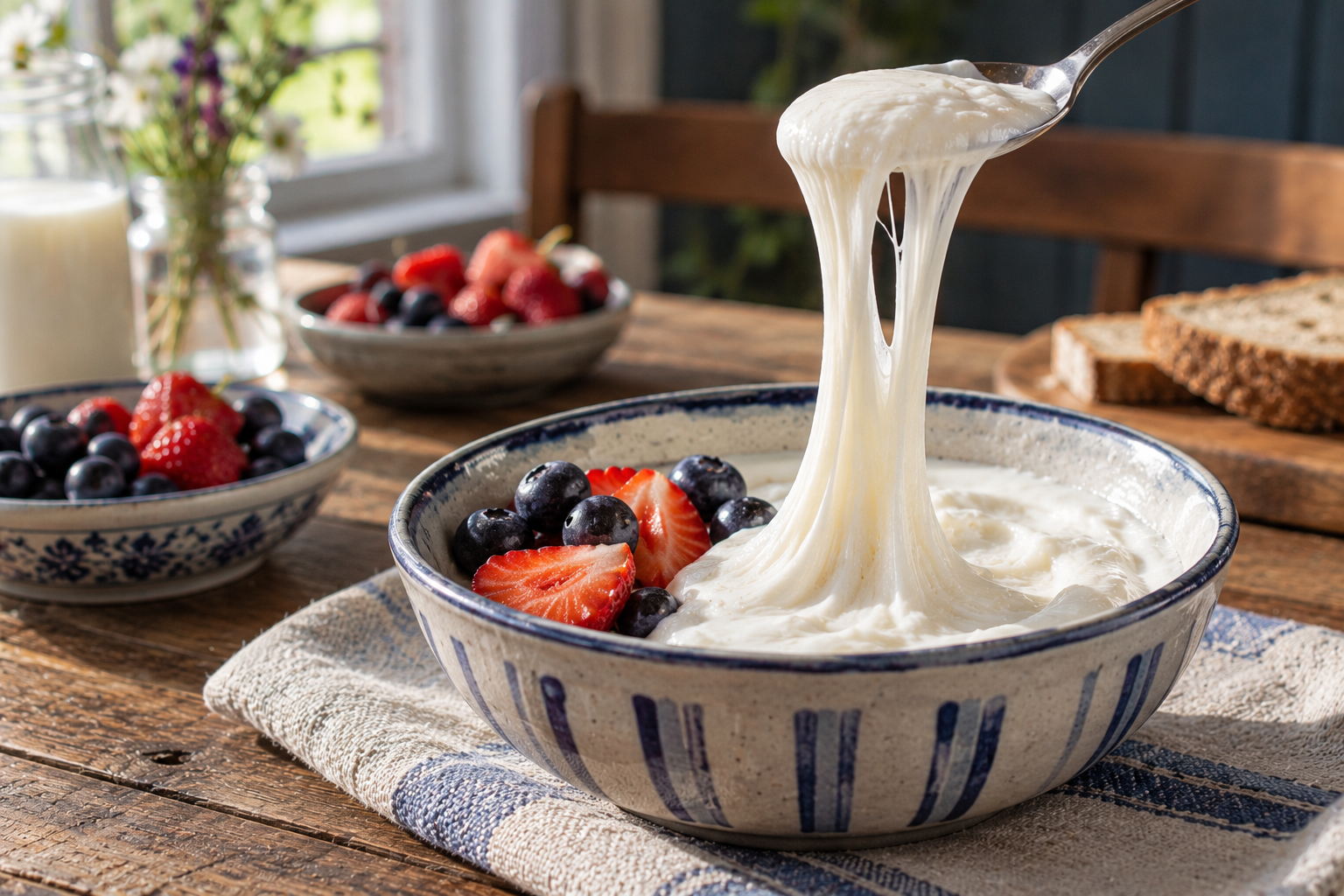
Yogurt is usually thick and creamy.
But what if it stretched into long, silky strands when you lifted your spoon?
Meet viili, a traditional Finnish fermented milk product.
Certain cultures used to produce viili create compounds that give it a distinctive ropy, almost elastic texture.
That might sound unusual, but it’s part of what makes this dairy food special.
Viili generally has a mild, tangy flavor and is often enjoyed with berries, jam, sugar, or cereal.
Like yogurt, it’s created through the controlled fermentation of milk, although the specific microorganisms and resulting texture are different.
Fun fact: The stretchy texture isn’t caused by gelatin. It’s produced by substances formed naturally by certain bacteria during fermentation.
7. Dadiah: Buffalo Milk Fermented in Bamboo
Where: West Sumatra, Indonesia
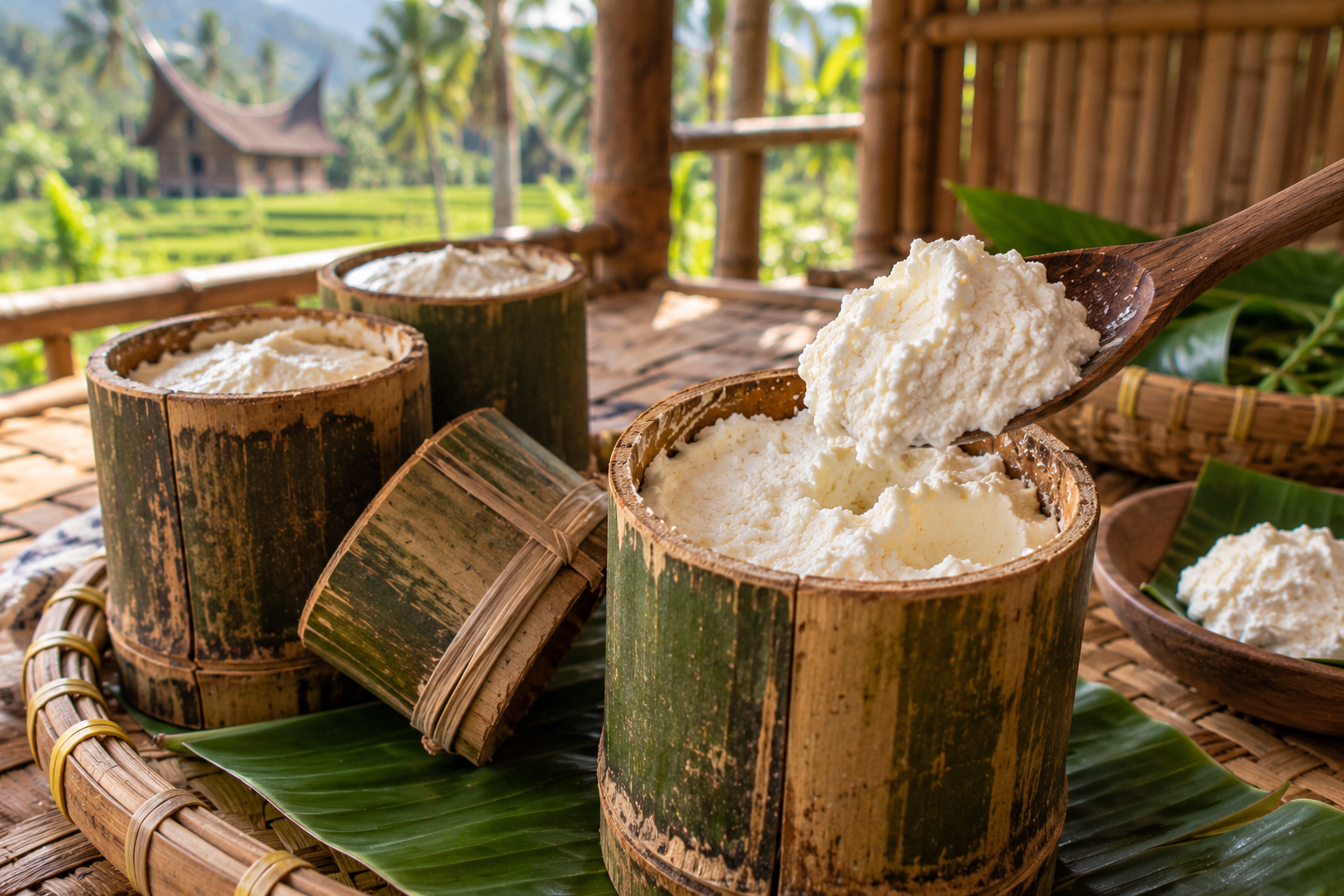
Here’s a dairy tradition that combines food science with an unexpected container.
Dadiah is a traditional fermented buffalo milk product associated with the Minangkabau people of West Sumatra, Indonesia.
Fresh buffalo milk is traditionally poured into bamboo tubes, covered, and allowed to ferment.
The result is a thick, tangy food somewhat similar to yogurt.
The bamboo and traditional preparation environment can contribute microorganisms involved in fermentation.
Dadiah may be eaten with rice dishes or combined with sweet ingredients, depending on local customs.
It’s a fascinating reminder that food traditions often develop around the materials and ingredients readily available in a particular region.
Fun fact: Bamboo isn’t just a convenient container in this tradition. Its use is part of the traditional fermentation process itself.
8. Doogh: A Yogurt Drink with Salt and Mint
Where: Iran and neighboring regions
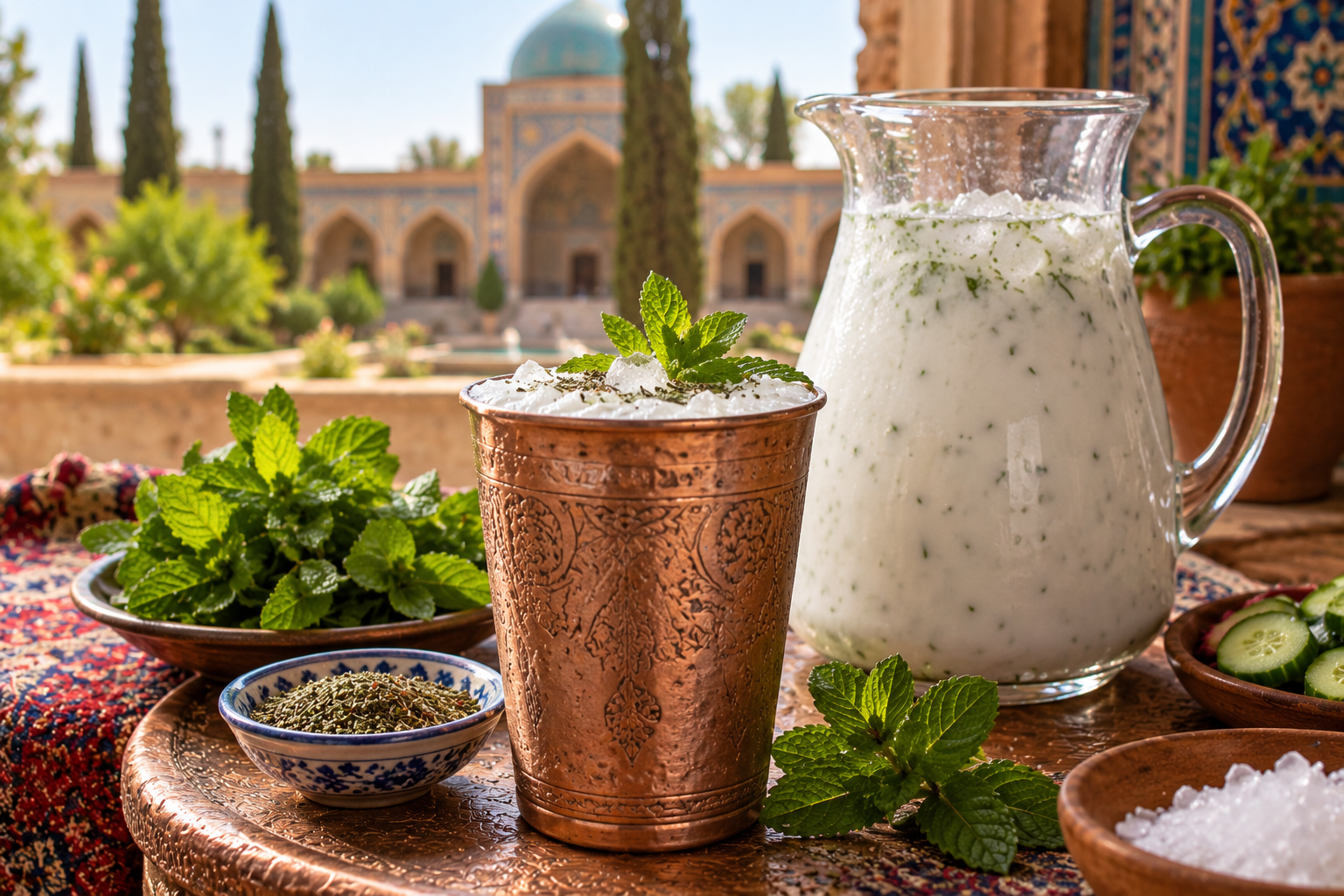
In the United States, we’re accustomed to sweetened yogurt drinks with fruit flavors.
But in Iran, a popular dairy beverage takes a very different approach.
Doogh is a refreshing drink made with yogurt, water, and salt. Mint or other herbs are sometimes added, and some versions are carbonated.
It’s tangy, savory, and especially refreshing alongside rich or spicy meals.
Variations of yogurt-based drinks are found throughout the Middle East, Central Asia, and surrounding regions, including ayran and other regional specialties.
These drinks show how the same basic ingredient—fermented milk—can become something completely different depending on local tastes.
Fun fact: Some commercially produced varieties of doogh are fizzy, giving this traditional dairy drink a soda-like sparkle.
9. Kajmak: The Creamy Spread of the Balkans
Where: Serbia, Bosnia and Herzegovina, and surrounding regions
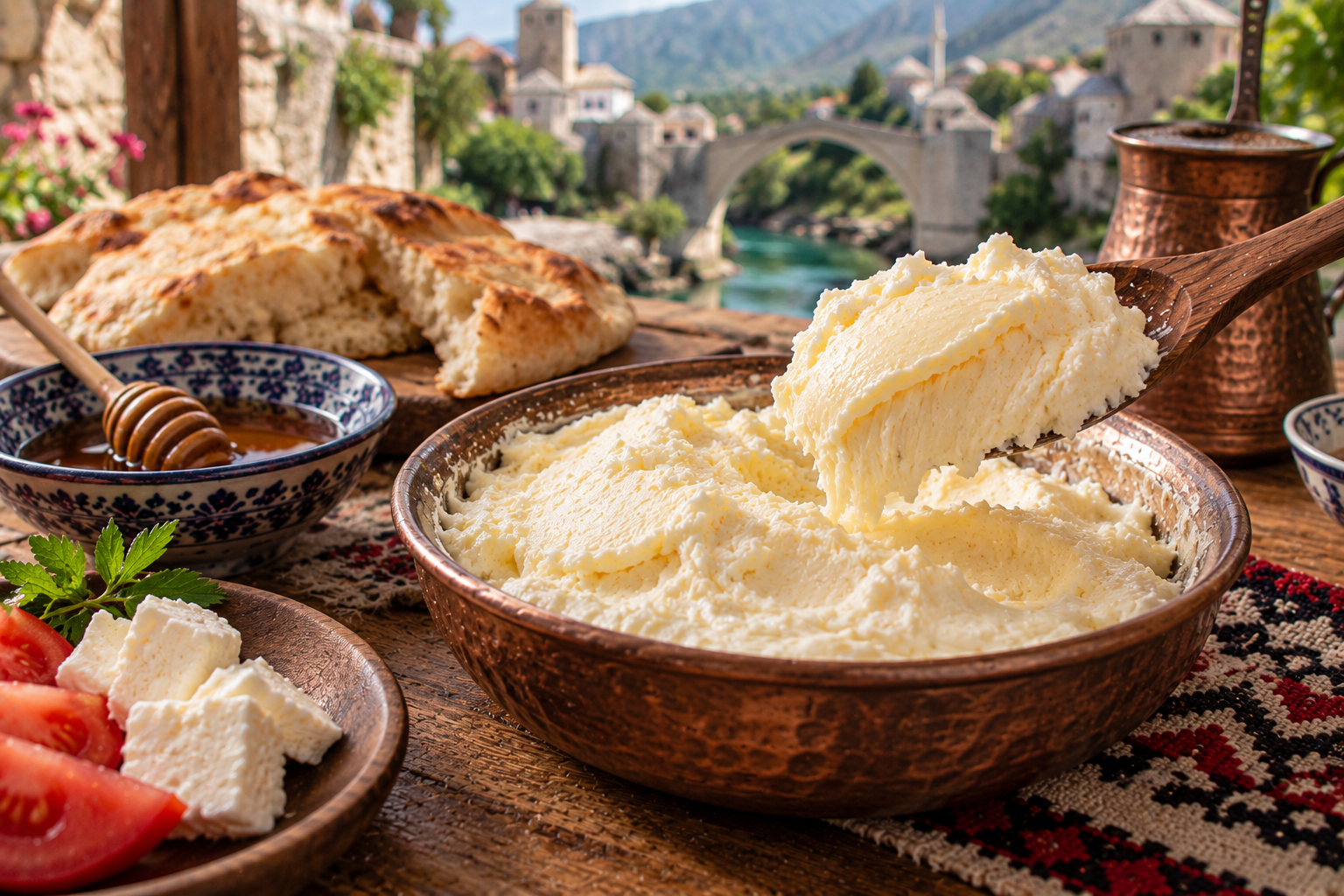
Imagine something between butter, clotted cream, and soft cheese.
That’s one way to describe kajmak.
This rich dairy specialty is traditionally made by heating milk, allowing a layer of cream to form on the surface, and carefully collecting it.
The cream may be enjoyed fresh or allowed to mature, developing a stronger flavor.
Kajmak is particularly popular in parts of the Balkans, where it’s often served with bread, grilled meats, or traditional pastries.
Depending on how it’s prepared, it can range from mild and creamy to tangy and intensely rich.
Fun fact: Fresh and aged kajmak can taste remarkably different, even though they begin with essentially the same dairy ingredient.
10. Skyr: Iceland’s Ancient High-Protein Favorite
Where: Iceland
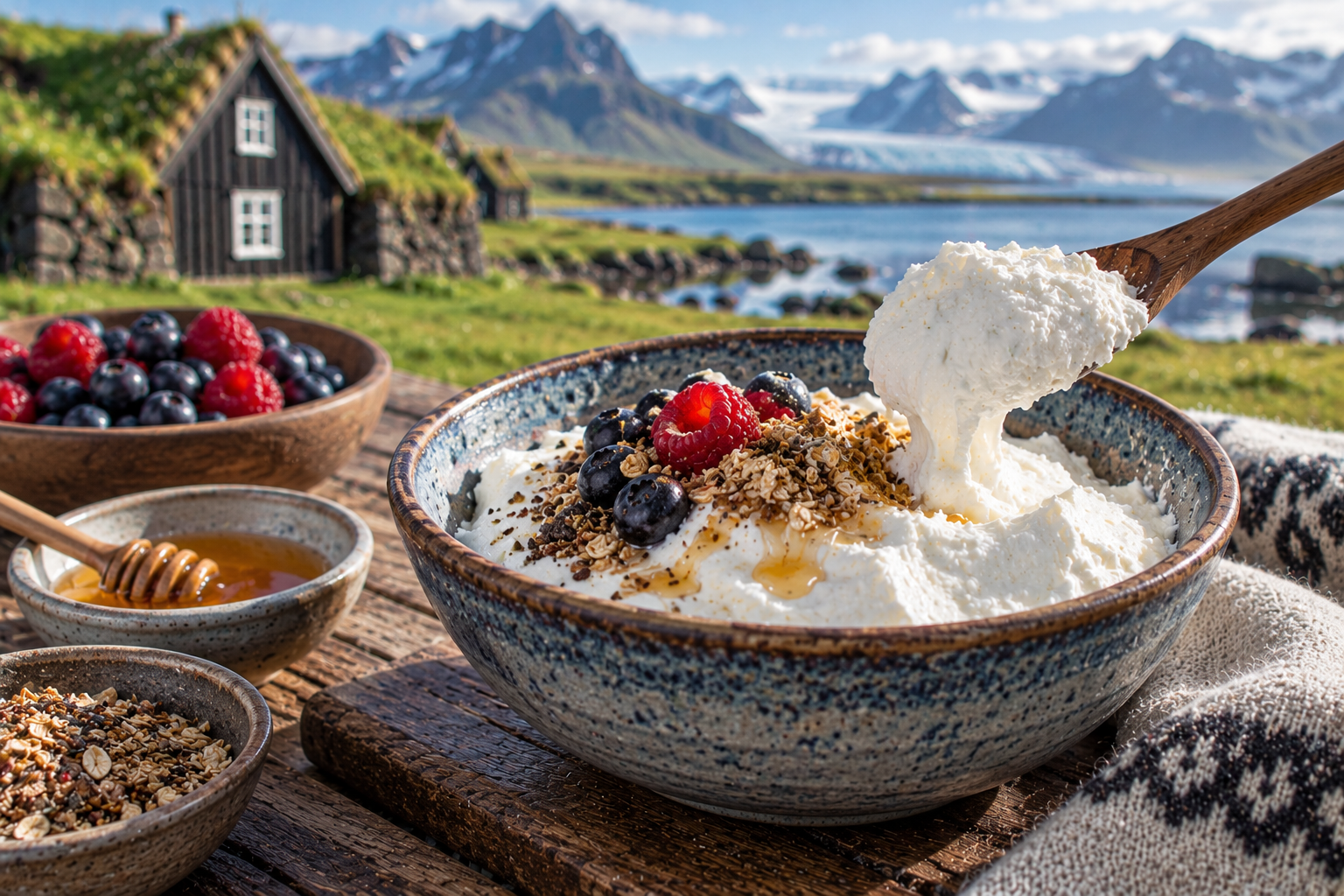
Our final stop might be the most familiar food on this list.
Skyr has become increasingly popular in American grocery stores, often appearing alongside Greek yogurt.
But this Icelandic dairy staple has a history stretching back more than a thousand years.
Traditionally, skyr is a cultured dairy product that’s strained to remove much of its liquid whey, producing a thick, creamy consistency.
Although it’s often marketed alongside yogurt, traditional skyr is technically classified as a fresh acid-set cheese.
Because of the straining process, skyr is generally high in protein relative to its serving size.
It’s commonly eaten with berries, milk, or other toppings.
Fun fact: Skyr is mentioned in medieval Icelandic literature, making it one of the older dairy traditions that remains popular today.
What These Unusual Dairy Foods Have in Common
At first glance, fermented horse milk, brown cheese, and stretchy Finnish yogurt might not seem to have much in common.
But look a little closer, and you’ll notice something remarkable.
Each of these foods represents a creative solution to a challenge.
In Mongolia, drying and fermenting dairy helped nomadic families preserve valuable nutrition.
In the Himalayas, butter-rich beverages and dried cheeses became part of life in a demanding mountain environment.
In Norway, concentrating whey created an entirely different kind of dairy food.
And in Iceland, straining cultured milk produced a thick, protein-rich staple that remains popular today.
Different environments. Different cultures. Different traditions.
One incredibly versatile ingredient: milk.
From Ancient Traditions to Modern Dairy Innovation
Here at High Desert Milk in Burley, Idaho, we’re fascinated by the many ways people have transformed milk throughout history.
While our production methods look quite different from the traditional techniques used in Mongolia, Norway, or the Himalayas, the underlying idea is surprisingly similar.
How can we take milk and turn it into something useful, delicious, and nutritious?
Today, modern dairy technology allows us to produce products such as butter, cream cheese, milk powders, and milk protein concentrates with precision and consistency.
Many of the principles involved—separating milk components, concentrating nutrients, removing moisture, and preserving quality—have parallels in dairy traditions developed over centuries.
It’s a reminder that modern food innovation didn’t begin in a laboratory.
It began with people experimenting, adapting, and discovering new possibilities with the ingredients they had available.
And judging by the incredible variety of dairy foods around the world, human creativity has never been in short supply.
Which One Would You Try?
So, after our whirlwind tour of the world’s most unusual dairy foods, we have one question:
Which one would you be brave enough to try?
Would you sip salty yak butter tea? Spread sweet Norwegian brown cheese on your waffles? Or spend an afternoon slowly chewing a piece of Himalayan chhurpi?
Maybe you’d rather stick with a classic slice of buttered toast.
We won’t judge.
After all, with thousands of years of dairy traditions behind us, there’s no shortage of delicious—and occasionally surprising—ways to enjoy milk.
From our dairy community in southern Idaho to tables around the world, here’s to the foods and traditions that bring us together.